Filling the Gap for Chicago's Most Vulnerable Animals
Chicago Animal Care and Control works tirelessly to provide a safety net for animals who have no one else. However, the reality of municipal budgets means that the city shelter is often limited in its capacity to provide specialized or intensive medical treatment. While CACC provides essential care, many animals arrive with injuries or illnesses that exceed the scope of a municipal clinic’s resources. Without intervention, these animals face an uncertain future.
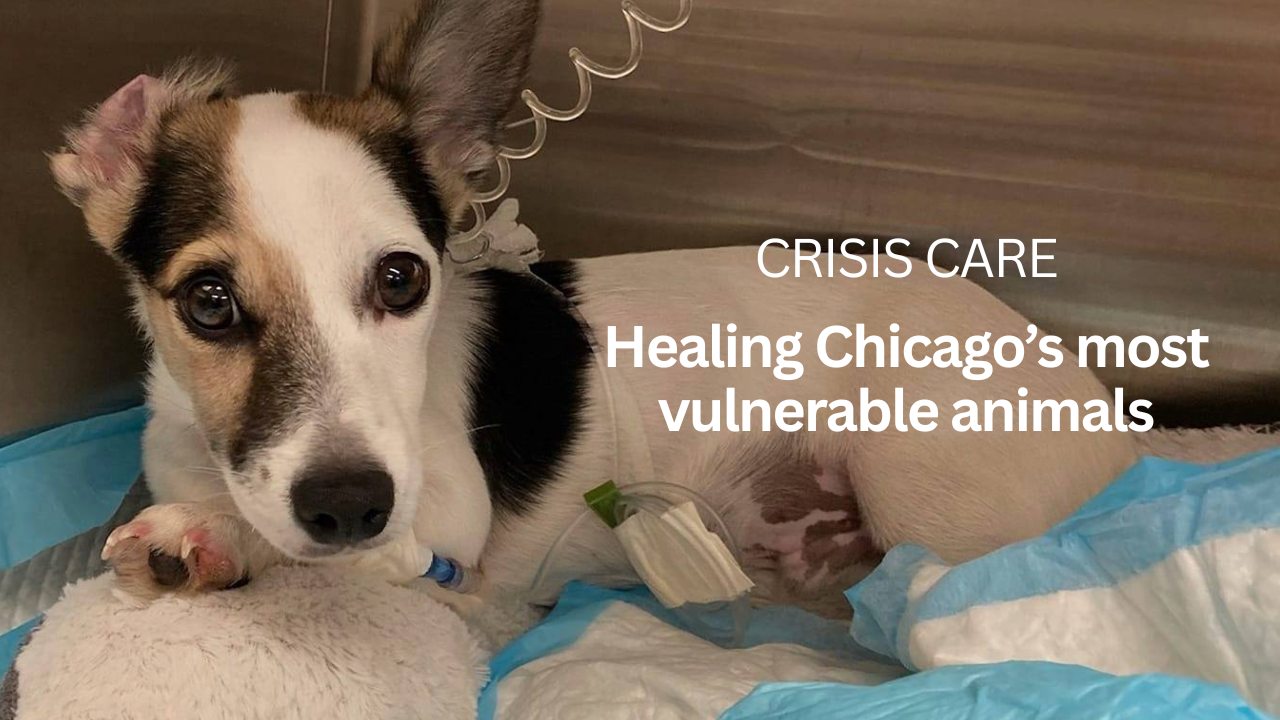
Our Crisis Care Program was created to ensure that limited city funding does not stand between an animal and its survival. Instead of being limited to “after hours” care, our program now provides year-round support for critical cases.
When an animal arrives at CACC in dire need, such as victims of traffic accidents, abuse, or sudden medical emergencies, FCACC steps in to:
• Identify High-Need Cases: We coordinate with the shelter to determine which animals require immediate transfer for advanced care.
• Provide Treatment: We facilitate the transport and admission of animals to emergency hospitals.
• Fund Specialized Procedures: We cover the costs of surgeries, medication, and intensive stabilization.
Please note: FCACC’s Crisis Care program is not available to private citizens, only to orphaned animals in emergency circumstances.
Crisis Care Success Stories
Clover
Clover was found in a dumpster by Chicago Police suffering from a bullet wound, facial lacerations, and a fractured jaw. Because her injuries required immediate, specialized intervention, the Crisis Care program facilitated her urgent transfer to MedVet for stabilization and pain management. Despite her traumatic past, Clover’s resilient spirit shone through, and she is now healing in a loving foster home. Her journey from a critical emergency to a peaceful recovery is exactly why this program exists.
Ben & Jerry
Ben and Jerry arrived at the shelter as five-month-old puppies with extreme, life threatening injuries that required immediate emergency care. Through the Crisis Care program, Ben was stabilized on a ventilator and treated for multiple fractures, while Jerry received a necessary leg amputation. Their long road to recovery was supported by FCACC every step of the way. Today, these two survivors are moving forward into the happy lives they deserve.